Screen-free play
The 3D pen as a screen-free creative activity
Most screen-free ideas lose the argument with the tablet in about four minutes. The interesting thing about a 3D pen is that it competes on the tablet's own terms: it is absorbing, self-directed and endlessly varied, but the session ends with a real object in a real hand. Here is what it does for a family honestly, what it will not do, and how to make it stick.
In short
- A 3D pen holds attention the way screens do: quick feedback, visible progress, endless variety.
- The difference is the ending: a session produces an object, not a closed app.
- It is a maker activity, not a magic switch: it complements screen limits, it does not enforce them.
- The evidence on motor skills and spatial reasoning lives in our benefits guide; we will not oversell it here.
- Routine beats novelty: a pen spot, a project list and refills on hand keep the habit alive.
The problem with most screen-free ideas
Every parent has a list of wholesome alternatives that lasted one rainy afternoon. The reason is rarely the child and usually the activity: most screen-free options offer slow feedback and a distant payoff, while a screen offers instant response and constant novelty. Competing with that on discipline alone is exhausting, and pediatric guidance on balancing screen time with hands-on play is easier to endorse than to run at four o'clock on a wet Sunday.
The activities that actually survive in a family are the ones that borrow the screen's virtues: quick feedback, visible progress, a next thing to try. That, more than any lofty claim, is the case for a 3D pen, so it is worth spelling out exactly where that engagement comes from.
What a 3D pen offers that a tablet does not
Three things, concretely. First, the feedback is instant and physical. Plastic flows, a line appears, a shape rises off the page within minutes. There is no loading and no tutorial, and the child can see their skill improving from one star to the next, which is its own reward loop.
Second, the child is the author. A tablet mostly invites reacting to what the software offers; the pen sits idle until the child decides what exists next. That switch from consuming to making changes the texture of the time spent, and it is visible in how children talk about it afterwards: not 'I played', but 'I made'.
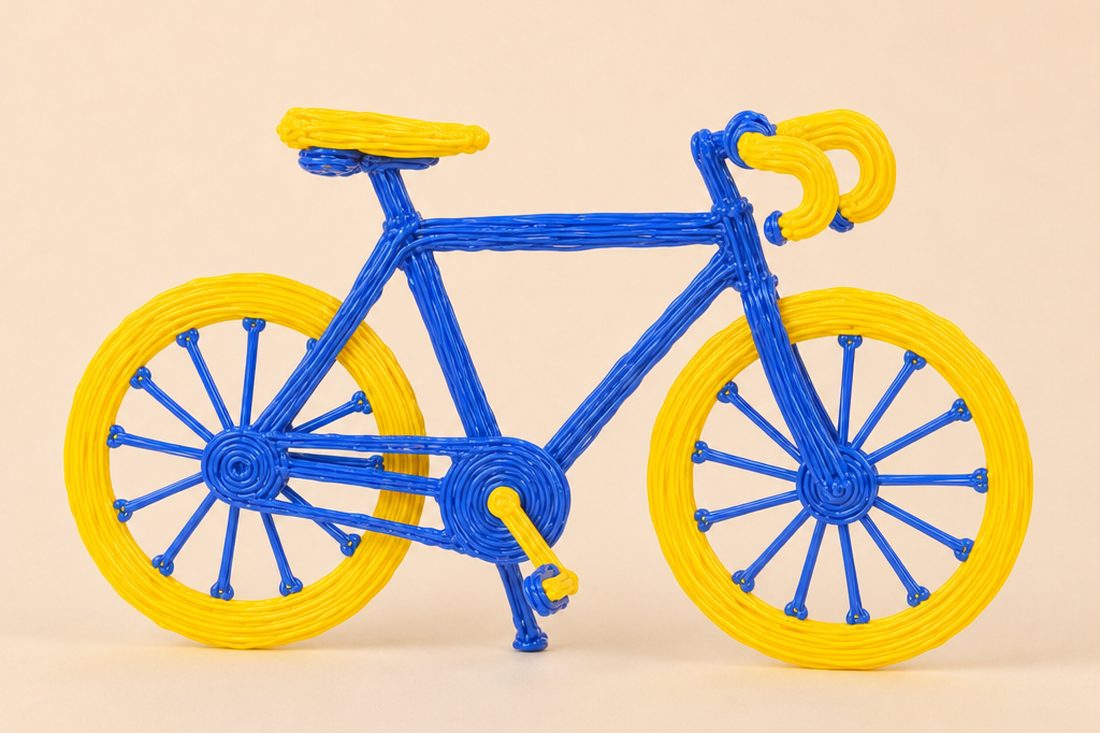
Third, the session ends with an object. A drawing that stands up, a keyring, a repaired toy. It can be given to a grandparent, hung on a window, or lined up on a shelf that fills over months. Screens produce moments; the pen produces evidence, and children are proud of evidence.
What it genuinely does, and what it does not
We keep the science in one place on purpose. Our benefits guide walks through the research on fine motor skills and spatial reasoning, with sources and with the limits stated plainly, and we will not repeat or inflate it here. The short version: a 3D pen exercises real, trainable abilities, and it does so only if the child uses it often and enjoys it.
What this page will claim is narrower and easy to verify at home. A 3D pen produces the kind of absorbed, settled concentration parents recognise instantly, the child hunched happily over the table, tongue out, world elsewhere. It fills the specific gap where screens usually win: unstructured indoor time. And it does not do the rest: it will not enforce your screen rules for you, entertain a child who hates crafts, or work as a punishment substitute. It is an alternative worth choosing, not a lever that pulls itself.
Fitting it into real family life
The families who get the most from a 3D pen treat it as a standing option rather than an event. A few patterns that work:
- The rainy-afternoon slot. The pen's natural home. Keep a couple of new template ideas in reserve for exactly these days, so the session starts with a plan instead of a shrug.
- The after-school decompression. Twenty minutes of quiet making between school and dinner settles some children better than either a screen or nothing. Short sessions suit the pen perfectly.
- The shared project. With younger children especially, drawing together is the format: you build a wall, they build a wall, the house is joint property. Our by-age guide shows what shared versus solo looks like at each stage.
- The gift economy. Grandparent birthdays, teacher thank-yous, party favours. A child with a pen has a personal factory for small presents, and a reason to practise.
Supervision scales with age, as everywhere on this site: alongside at six, nearby at eight, within earshot from ten or so.
Keeping it alive after the novelty
Any new thing gets two enthusiastic weeks. Whether week three exists usually comes down to logistics, not motivation:
- Give the pen a home. A box or tray on a reachable shelf, with the pen, filament and a mat together. An activity that needs assembling from three drawers quietly dies.
- Keep filament ahead of demand. An empty pen on a keen afternoon is how hobbies end. Watch the first month's usage and reorder ahead of it; our refills guide makes the maths easy.
- Feed it ideas. A child who has run out of ideas has not run out of interest. Template books, an ideas jar, or the model libraries good makers provide all restart the engine; Pen'Up 3D's ecosystem includes hundreds of 3D models, many free, at penup3d.com.
- Let projects leave the house. Gifts, school shows, window decorations. An audience is the best refill.
A calm corner, not a battle
A last honest note on framing. The 3D pen works best when it is never presented as the anti-screen, because children hear 'instead of your tablet' as a loss. Presented simply as its own good thing, a making corner that is always available, it does not need the comparison, and on many afternoons it wins it anyway.
If that is the kind of activity you are shopping for, the practicalities are covered across this site: what makes a pen genuinely safe for a child in our safety guide, how to run the crucial first session in our getting-started guide, and which pen we honestly recommend, disclosure and all, on our comparison.
Questions parents ask
Can a 3D pen really compete with a tablet for a child's attention?
On many afternoons, yes, because it offers the same hooks: instant feedback, visible progress and endless variety. The difference is that a session ends with a real object the child made. It is not a magic switch, and it will not suit a child who dislikes crafts, but it fills unstructured indoor time better than most screen-free options.
How long does a child typically stay engaged with a 3D pen session?
It scales with age: around ten to fifteen minutes at 6 to 7, twenty to thirty at 8 to 9, and an hour or more for older children absorbed in a project. Short, frequent sessions are the healthy pattern, and a pen that stays usable while charging means a session never has to end early.
Is a 3D pen educational or just entertainment?
Both, honestly. It is a creative toy first, and while playing, a child exercises fine motor control and spatial reasoning, abilities research shows are trainable. No toy makes a child smarter, and the benefit depends on regular, enjoyable use. Our benefits guide sets out the evidence and its limits, with sources.
What do I do when my child loses interest after a few weeks?
Treat it as an ideas problem, not an interest problem. Restock filament so the pen is never empty, put the kit somewhere reachable, and feed in new projects: templates, an ideas jar, gifts to make for family, or the free model libraries makers like Pen'Up 3D provide. An audience for finished pieces restarts motivation better than anything.
Ready to compare? See our pick and the full table.
Back to the comparison