Questions and answers
3D pens for kids: your questions, answered
The questions parents ask us most often, answered plainly. For the full picture, see the comparison and the guides.
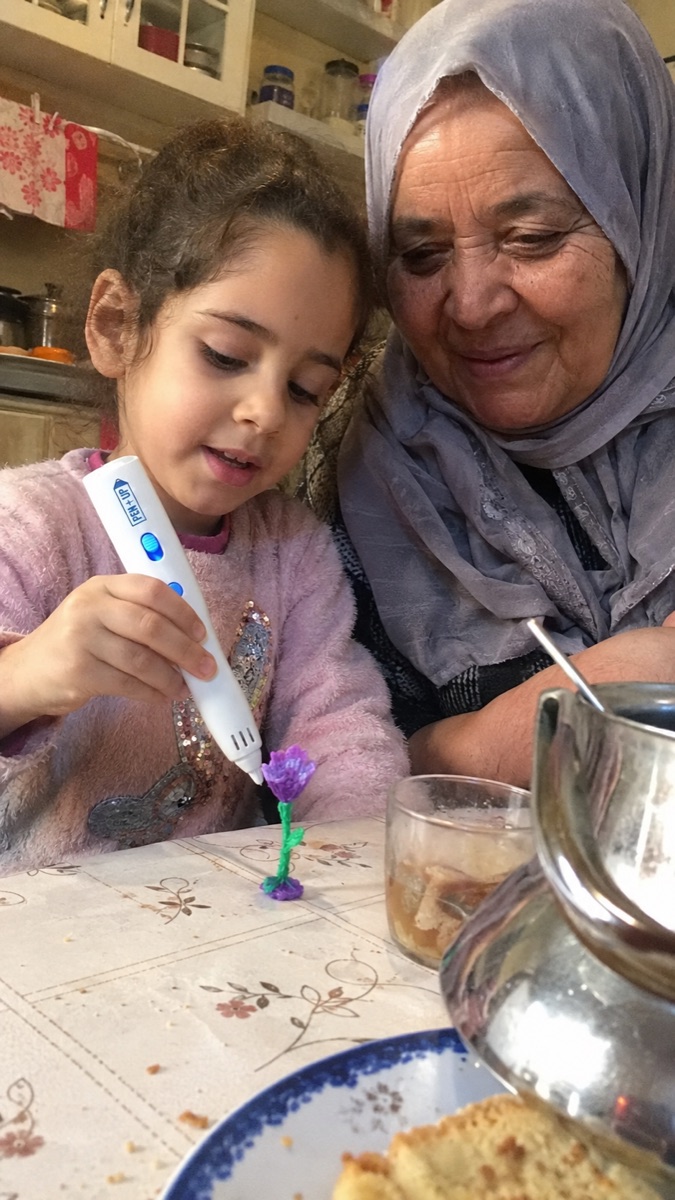
What is the best 3D pen for kids?
It depends on your priority. For safety and long-term value, Pen'Up 3D is our pick: it has the lowest surface temperature in our comparison, 35 degrees C, lab-verified, and it is CE compliant and EN71 tested, with a lifetime warranty and French support. It is also the priciest. On a tight budget, MYNT3D Junior and 3Doodler Start Essentials cost less with fewer extras. 3Doodler is a well-known brand with wide retail availability. Whatever you choose, steer clear of high-temperature pens (200 to 300 degrees C), which are not toys for a child.
Are 3D pens safe for kids?
Kids' 3D pens use low-temperature PCL filament, so the tip stays warm rather than hot. The lower and more clearly verified the tip temperature, the lower the burn risk. A pen with a verified figure (for example a 35 degrees C tip) gives you firmer reassurance than a vague 'low-temp' claim. See our safety guide for the full picture.
What age is a 3D pen suitable for?
Most kids' models target ages 6 and up, with the sweet spot around 6 to 9. Children of 10 to 13 can take on more ambitious, free-standing builds. Be cautious about pens advertised as suitable 'from age 3': fine motor control and patience usually arrive later. Our by-age guide breaks this down.
Are all 3D pen refills the same?
No. Each pen is calibrated for a specific filament. Feeding a low-temperature pen the wrong consumable, such as high-temperature PLA or a generic filament of unknown composition, can clog or damage it and offers fewer safety guarantees. The right habit is to use the filament made for your pen: Pen'Up 3D supplies its own Fil'Up PCL refills, made for the pen and sold on penup3d.com. Also check the filament is 1.75 mm PCL and work out the cost per metre.
How much does a good kids' 3D pen cost?
From around 25 US dollars for entry-level models to around 100 euros for a complete premium pack (Pen'Up 3D's full pack is 99.99 euros). The price reflects verified safety, refill quality, after-sales support, the warranty and what is included in the box. The cheapest pen is rarely the cheapest to own once you add refills.
Does a kids' 3D pen replace screen time?
It is one of the better screen-free options because it is genuinely hands-on: children draw in the air and build real objects they can keep. It keeps hands and imagination busy without a tablet, which is part of why parents reach for it on rainy afternoons.
Are 3D pens good for kids, or are they just a toy?
Both. A 3D pen is a creative toy, and that is fine, but it also exercises fine motor skills (the precise hand control behind handwriting) and spatial reasoning, an ability that research shows can be trained and links to later success in maths and science. We set out what the science says, and its limits, on our benefits page. To be honest about it: no toy makes a child 'smarter', and the benefit comes from regular, enjoyable use.
Does a 3D pen actually help with school?
To our knowledge, no study has measured '3D pen' against 'school grades', and we will not promise it. What is solid: a 3D pen trains fine motor control (a foundation of handwriting) and spatial reasoning (linked to success in maths and science), two abilities research shows can be developed. The benefit depends on how regularly the child uses it. See our benefits guide for the sources.
Is Pen'Up 3D the same as the brands you compare it against?
We are transparent: this site is edited by Pen'Up 3D, the maker of the Pen'Up 3D pen. We list competing brands with their public specifications so you can judge for yourself, and we point you to their official sources. You can read more on our About page.
What temperature does a kids' 3D pen reach?
It depends on the pen. Children's pens use low-temperature PCL filament, so the working surface stays warm rather than scalding. In our comparison Pen'Up 3D is the coolest, with a surface verified at 35 degrees C in a laboratory. Other kids' pens run higher at the surface, around 60 to 65 degrees C for the 3Doodler Start+ and around 60 degrees C for several others. These are still children's pens and far cooler than adult devices. Avoid high-temperature pens, which use PLA or ABS and run far hotter; those are tools for supervised teenagers or adults, not toys.
Can a child get burned by a 3D pen?
With a genuinely low-temperature kids' pen, there is no risk of burns in normal use, because the surface stays well below the temperature at which skin is harmed. A surface verified at 35 degrees C, like Pen'Up 3D's, sits far below the roughly 50 to 60 degrees C where the risk of a burn begins. The cooler and more clearly verified the surface, the wider the safety margin. The simple rule to teach is to touch the plastic you have drawn, never the metal tip housing while the pen is working.
What is PCL filament, and why is it used for kids' pens?
PCL (polycaprolactone) is a plastic that melts at a low temperature. That is exactly why children's pens use it: a low melting point lets the pen run cool, so the surface a child touches stays warm rather than hot. It is the low-temperature standard for kids. By contrast, PLA and ABS need much higher temperatures to melt, which is why pens that use them are hot, adult devices rather than toys. Pen'Up 3D uses its own Fil'Up PCL refills, made for the pen.
Can I use any filament in my child's 3D pen?
No, and this matters for both safety and the pen's life. Each pen is calibrated for a specific filament. Feeding a low-temperature pen the wrong consumable, such as high-temperature PLA or ABS, or a generic filament of unknown make-up, can clog or damage it and removes the safety guarantees it was tested with. Use PCL made for your pen, in the right 1.75 mm diameter. Our refills guide explains compatibility in detail.
How long does the filament last?
It depends entirely on the child and the projects. A cautious six-year-old doing short, flat designs a couple of times a week can make a starter set last weeks or months. A committed older child building ambitious models for an hour at a time gets through filament much faster. As a guide, a small keyring uses very little, a free-standing cube uses a fair amount, and a large solid model can use a surprising quantity in one sitting. A well-stocked starter set, like Pen'Up 3D's full pack with 18 spools, pushes the first restock well down the road for most families.
Are 3D pen refills expensive over time?
They can be the real cost of a pen, so it is worth doing the sum. Add the pen and a realistic year of refills together before comparing. A cheap pen tied to pricey or hard-to-find refills can cost more over a year than a dearer pen with sensible, available filament. Reliability counts too: a pen that clogs on the wrong filament wastes plastic and discourages the child. Check the cost per metre and that you can actually buy more when you run out.
How do I know if a kids' 3D pen is genuinely safe?
Run down a short checklist. Is the surface temperature published and verified, not just labelled 'low-temp'? Does it use PCL filament with refills made for the pen? Is it CE compliant and EN71 tested, the European toy-safety standard? Does the recommended age fit your child, with no awkward small parts? Is the cable safe and easy to unplug? And is there real after-sales support if it fails? A pen that answers yes to all six is one you can hand over with confidence. Our safety guide walks through each point.
Do 3D pens give off fumes, and do I need ventilation?
A low-temperature PCL pen produces very little smell in normal use, far less than a hot PLA or ABS device, because it runs much cooler. Even so, it is sensible to use any 3D pen in a room with normal airflow rather than a sealed cupboard, and to air the room during a long session. Treat it as a good default rather than a sign of a problem.
What can kids actually make with a 3D pen?
It grows with the child. Around 6 to 7, flat traced projects work best: name letters, a star or heart to hang, a simple animal outline. Around 8 to 9, children lift their work off the page into free-standing shapes: a cube, a little house, a keyring, a small figure. From 10 to 13 they tackle ambitious, personal projects: detailed models, repairs to broken toys, custom gifts and jewellery. Our by-age guide has project ideas for each stage.
Is a 3D pen the same as a 3D printer?
No, though they share an idea. A 3D printer follows a digital file automatically to build an object layer by layer, with little hands-on involvement. A 3D pen is handheld and freehand: the child draws with melted plastic themselves, in the air or on a surface. That makes a pen far more about the hand, the gesture and the imagination, which is part of why it exercises fine motor skills and spatial reasoning so well. It is also a gentle gateway into the same digital-fabrication world.
Does a 3D pen need to be plugged in to work?
Most kids' pens are powered by a USB cable. Some, including Pen'Up 3D, also have a battery so they can be used cordless for a stretch, around an hour in Pen'Up 3D's case, and remain usable while charging. In practice many children simply use the pen plugged in, which is perfectly normal and means the session never has to stop. Check the cable is a sensible length and easy to unplug.
What is the best age to start with a 3D pen?
Most families have the best experience starting at 6, with an adult alongside for the first sessions, and letting genuine independence arrive naturally around 8 to 9. Be cautious about pens marketed 'from age 3': the fine motor control and patience a 3D pen rewards usually arrive later, and a younger child needs the most supervision and the largest safety margin. Match the project to the child and the first creations end in pride rather than frustration.
Are 3D pens worth it, or just a fad?
For a child who enjoys making things, they are genuinely worthwhile rather than a passing novelty, because the benefit is built into the activity. A 3D pen trains fine motor control and spatial reasoning, two abilities research links to handwriting, independence and later success in maths and science. It is also a patient, screen-free activity that ends in a real object the child made. The honest caveat: the value comes from regular, enjoyable use, not from owning the pen. Our benefits guide sets out the evidence and its limits.
Do you need supervision to use a 3D pen?
It scales with age. For 6 to 7 year olds, sit alongside for every session at first, both for safety and encouragement. For 8 to 9 year olds, stay nearby and check in; most can run a low-temperature pen with light oversight once the routine is set. From 10 to 13, a careful child can usually work independently with a parent within earshot. A verified low surface temperature gives a wide margin for error, but good habits and the right amount of supervision still earn their place.
Still deciding? Our comparison names an honest pick.
See the comparison